
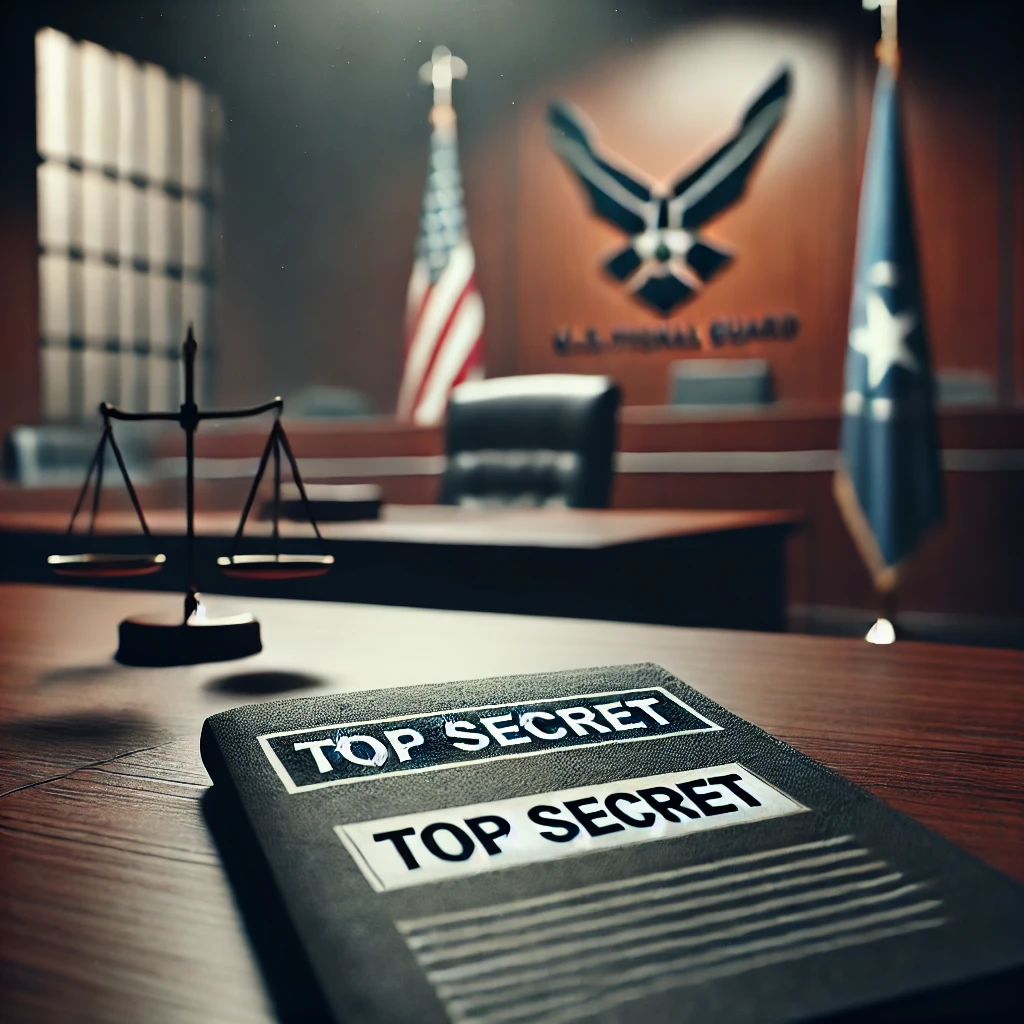
In an unprecedented case, Jack Teixeira, a 22-year-old Massachusetts Air National Guard member, was sentenced to 15 years in federal prison after pleading guilty to leaking highly classified U.S. military intelligence on the popular online gaming platform Discord. This case has become a stark example of the potential vulnerabilities in safeguarding national secrets.
The Case Unfolds: A Breach in National Security
Teixeira, once part of the 102nd Intelligence Wing at Otis Air National Guard Base, had access to some of the government’s most sensitive information as a “cyber transport systems specialist.” Holding a top security clearance, Teixeira began sharing classified documents with a private Discord group called “Thug Shaker Central,” which included roughly 20-30 young men. Initially transcribing the sensitive documents, Teixeira later shared photos of files with “SECRET” and “TOP SECRET” markings, fearing repercussions for typing out the information.
The leaked files included intelligence on Russia’s invasion of Ukraine, detailing troop movements, supply lines, and U.S. assessments of global affairs, from China and the Middle East to Israel’s Mossad. Prosecutors contend that Teixeira’s actions inflicted lasting damage on international relations and compromised U.S. intelligence-gathering capabilities, as noted by Acting U.S. Attorney Joshua Levy: “This conduct caused immediate operational damage and long-term enduring damage to our relationships with our allies and our intelligence-gathering methods.”
Motivation and Mental Health Claims: A Complex Defense
Teixeira’s defense argued for leniency, suggesting that his actions stemmed from social isolation and a desire to educate his friends, rather than harm the United States. His attorneys highlighted his autism diagnosis, arguing that his “intent was never to harm the United States” but rather to engage in discussions about world events to counter misinformation. However, prosecutors dismissed these claims, emphasizing that Teixeira’s actions were motivated by ego and a desire to impress his online audience.
Jody Cohen, the FBI special agent overseeing the investigation, pointed out Teixeira’s intention to gain attention and notoriety: “He did this to boost his ego, impress his anonymous friends, and set the record straight about Russia’s invasion of Ukraine.”
A Landmark Sentencing Under the Espionage Act
Federal prosecutors initially sought a nearly 17-year sentence, labeling the leak as one of the most consequential breaches under the Espionage Act in modern history. Teixeira ultimately accepted a plea agreement for 16 years, acknowledging six counts of willful retention and transmission of classified information. In addition to his federal sentence, Teixeira is scheduled for a military court-martial in March 2025, which could carry further penalties.
Teixeira’s name, as Levy noted in a press conference, will likely become synonymous with the gravity of mishandling classified information: “I expect that starting tomorrow, Jack Teixeira’s name will be mentioned when people are trained about the gravity of a top-secret clearance and the consequences.”
Implications for National Security and the Pentagon’s Response
The incident has raised broader concerns about security protocols within the U.S. military. The Biden administration scrambled to contain the diplomatic fallout, while the Pentagon has since implemented stricter measures to protect classified materials, re-evaluating access protocols and disciplinary procedures. Teixeira’s actions were a wake-up call, prompting the Department of Defense to enhance its scrutiny of personnel with access to high-level information.
Authorities revealed that Teixeira had attempted to destroy evidence before his arrest, with investigators discovering a smashed tablet, laptop, and gaming console at his home. These actions, combined with his use of an online platform to disseminate secrets, exposed a vulnerability in U.S. information security, especially given the shift to digital storage and virtual communication in intelligence-sharing.
A Legacy of Leaks in the Digital Age
This case marks one of the most significant breaches of U.S. intelligence in recent years, underlining the complex challenges posed by digital access and the ease with which classified information can be shared. The fallout from Teixeira’s leak continues to ripple through U.S. intelligence communities, reshaping policies on information handling and classified data protection.
Teixeira, reflecting on the gravity of his actions to a friend after his arrest, reportedly said, “I never wanted it to get like this. I prayed to God that this would never happen.” His case serves as a reminder of the severe consequences that accompany breaches of national trust in an age where information flows swiftly and sometimes dangerously beyond the control of institutions designed to safeguard it.